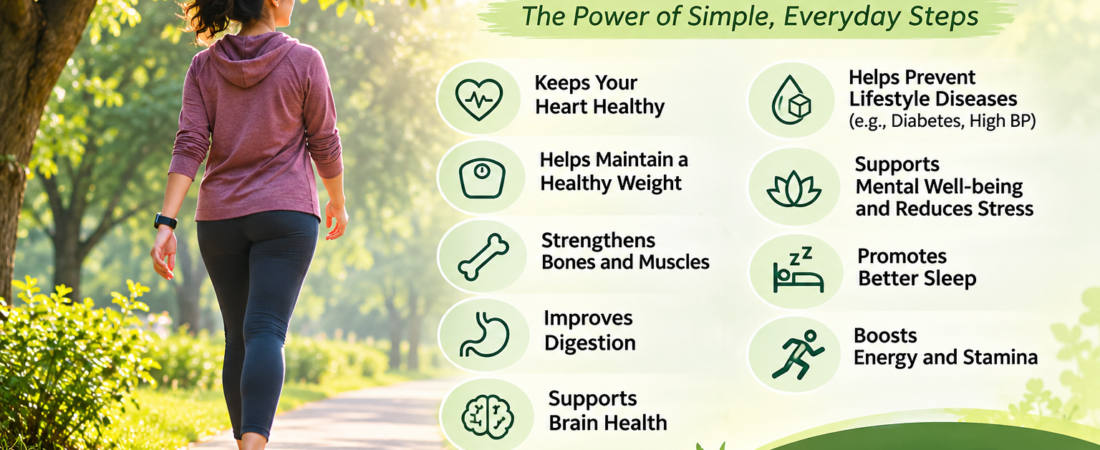
The Importance of Taking Steps Every Day
In a world where busy schedules, long working hours, and sedentary lifestyles have become increasingly common, we often overlook one of the simplest activities that can protect our health: walking.
Walking is more than just a way to get from one place to another. It is a natural form of physical activity that helps keep our body active, strengthens important organs, supports mental well-being, and reduces the risk of several lifestyle-related diseases.
The best part? Walking is free, requires no special equipment, and can be practised by people of almost every age group.
But why is walking so important for good health? Let’s understand.
1. Our Bodies Are Designed to Move
The human body is designed for movement, not for sitting continuously for hours. However, modern lifestyles often involve spending most of the day sitting at desks, working on computers, watching television, or using mobile phones.
Prolonged inactivity can negatively affect metabolism, circulation, muscle strength, and overall fitness.
Walking helps counter these effects by activating muscles, improving circulation, and encouraging the body to use energy efficiently.
Even short walking breaks throughout the day can make a difference.
2. Walking Keeps Your Heart Healthy
Your heart is a muscle that needs regular activity to remain healthy. Walking increases your heart rate moderately and improves cardiovascular fitness.
Regular walking can help:
- Improve blood circulation.
- Lower high blood pressure.
- Improve cholesterol levels.
- Reduce the risk of heart disease and stroke.
- Strengthen the cardiovascular system.
A brisk walk for 30 minutes a day can be an excellent way to support long-term heart health.
3. Walking Helps Prevent Lifestyle Diseases
Many common health problems, including type 2 diabetes, obesity, and high blood pressure, are associated with physical inactivity.
Walking regularly helps improve insulin sensitivity, allowing the body to use blood glucose more effectively.
A particularly useful habit is walking for 10–15 minutes after meals. This can help reduce post-meal blood sugar spikes.
Combined with a balanced diet and other healthy lifestyle habits, walking can play an important role in preventing and managing lifestyle-related conditions.
4. Walking Helps Maintain a Healthy Weight
Maintaining a healthy weight is important for overall well-being. Walking burns calories and increases daily energy expenditure.
Although walking may not burn as many calories as high-intensity workouts, it is easier to sustain over long periods.
Regular walking, combined with healthy eating habits, can help:
- Manage body weight.
- Reduce excess body fat.
- Maintain metabolic health.
- Prevent gradual weight gain.
Consistency matters more than walking extremely long distances occasionally.
5. Walking Strengthens Bones, Muscles, and Joints
Walking is a weight-bearing exercise that helps maintain bone strength and supports healthy muscles.
It particularly engages the muscles of the legs, hips, and core.
Regular walking can also improve:
- Balance and coordination.
- Joint mobility.
- Muscle endurance.
- Physical independence as we age.
For older adults, walking can be especially valuable in maintaining mobility and reducing the risk of falls. People with joint problems should choose a comfortable pace and seek medical advice when needed.
6. Walking Is Essential for Mental Well-being
Good health is not just about having a healthy body; mental well-being is equally important.
Walking can help reduce stress, improve mood, and support emotional health. Physical activity stimulates the release of chemicals in the brain that influence mood and feelings of well-being.
Walking outdoors, particularly in green surroundings, can also provide a refreshing break from everyday responsibilities.
A short walk can help clear your mind, improve concentration, and make you feel more relaxed.
7. Walking Improves Digestion
Physical movement supports normal digestive activity. A gentle walk after eating can help the digestive system function comfortably and may reduce post-meal sluggishness.
Walking after meals can also help regulate blood glucose levels.
Instead of immediately lying down or sitting for extended periods after eating, consider taking a gentle 10–15-minute walk.
8. Walking Supports Better Sleep
Regular physical activity can improve sleep quality and help regulate the body’s natural sleep-wake cycle.
Walking outdoors during daylight provides exposure to natural light, which helps regulate the body’s internal biological clock.
People who maintain a consistent walking routine may experience better sleep and improved daytime energy.
9. Walking Helps Maintain Brain Health
Walking increases blood circulation, including blood flow to the brain.
Regular physical activity is associated with better memory, attention, and cognitive function. It may also help reduce the risk of age-related cognitive decline.
This makes walking an important habit not only for physical fitness but also for maintaining mental sharpness as we grow older.
How Much Walking Do You Actually Need?
According to widely accepted physical activity guidelines, adults should aim for at least 150–300 minutes of moderate-intensity aerobic activity every week.
For walking, a practical goal is approximately 30 minutes of brisk walking on most days.
Here is a simple guide:
| Daily Walking Time | Potential Benefit |
|---|---|
| 10–15 minutes | A good starting point; helps reduce sedentary time |
| 20 minutes | Builds endurance and daily activity |
| 30 minutes | Supports cardiovascular and metabolic health |
| 45 minutes | Increases overall physical activity |
| 60 minutes | Helps build stamina and increase energy expenditure |
You don’t have to complete your walking in one session. Three 10-minute walks throughout the day can also be beneficial.
Is 10,000 Steps a Day Necessary?
You may have heard that everyone should walk 10,000 steps every day. However, 10,000 is not a universal medical requirement.
Research suggests that meaningful health benefits can be achieved even with fewer steps, particularly for people who are currently inactive.
The ideal step count depends on factors such as:
- Age.
- Fitness level.
- Existing health conditions.
- Daily activity.
- Personal fitness goals.
Rather than suddenly aiming for 10,000 steps, start with your current average and gradually increase your daily movement.
Simple Ways to Include More Walking in Your Daily Routine
Making walking a habit does not require a major lifestyle change.
Here are some practical ideas:
- Take a 10-minute walk after lunch or dinner.
- Choose stairs instead of lifts whenever practical.
- Walk while talking on the phone.
- Take short movement breaks during working hours.
- Park a little farther away from your destination.
- Enjoy a morning or evening walk in a nearby park.
- Use a fitness tracker or smartphone to monitor your steps.
The key is to reduce long periods of sitting and make movement a regular part of your day.
Final Thoughts: Don’t Underestimate the Power of Walking
Walking is one of the most accessible and effective ways to support good health. It strengthens the heart, supports healthy blood sugar levels, helps maintain body weight, improves digestion, strengthens muscles and bones, and contributes to better mental well-being.
You don’t need an expensive gym membership or an intense workout routine to start taking care of your health.
All you need is a comfortable pair of shoes and the willingness to take the first step.
Start with 10 minutes today. Gradually build your routine, listen to your body, and stay consistent.
Remember, walking is not just about covering distances; it is about investing in a healthier, happier, and longer life.
Your health journey begins one step at a time.
Safety and Accessibility: Walking at Your Own Pace
Walking should be a safe, comfortable, and enjoyable activity for everyone, regardless of age or fitness level. However, a few precautions can help make your walking routine safer and more accessible.
Safety Tips:
- Wear comfortable, well-fitting footwear with good support.
- Start slowly and gradually increase your walking duration and pace.
- Choose safe, well-lit walking paths with even surfaces.
- Stay hydrated, particularly during hot weather.
- Avoid walking during extreme heat or severe weather conditions.
- Wear reflective clothing when walking in low-light conditions.
- Listen to your body and stop if you experience chest pain, dizziness, unusual breathlessness, or significant discomfort.
Making Walking Accessible for Everyone:
Walking routines should be adapted to individual needs and abilities. Older adults, beginners, pregnant individuals, and people with mobility limitations or chronic health conditions may need modifications.
- Start with shorter walks and take breaks whenever needed.
- Use a walking aid or mobility support if necessary.
- Choose accessible paths with ramps, benches, and smooth surfaces.
- Consider indoor walking at home or in a shopping centre when outdoor conditions are unsuitable.
- If walking independently is difficult, consider walking with a companion.
People with existing medical conditions or significant mobility limitations should consult a healthcare professional before starting a new exercise routine.
Remember: You do not need to walk fast, cover long distances, or achieve a particular step count to benefit from movement. The best walking routine is one that is safe, comfortable, and sustainable for you.