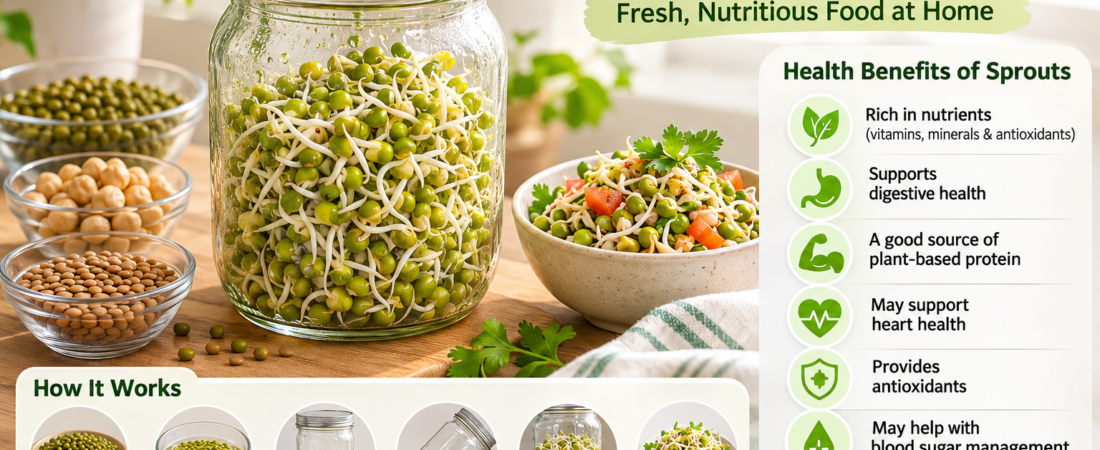
Sprouting Jar: A Simple Way to Grow Fresh, Nutritious Food at Home
Imagine growing fresh, crunchy, nutrient-rich food in your kitchen without soil, a garden, or expensive equipment. That’s exactly what a sprouting jar makes possible!
A sprouting jar is a simple yet effective kitchen tool designed to grow edible sprouts from seeds, beans, and legumes. With just seeds, clean water, and a few minutes of daily care, you can enjoy fresh sprouts at home throughout the year.
Beyond its convenience, sprouting is an excellent way to add variety, freshness, and nutritional value to your everyday diet.
What Is a Sprouting Jar?
A sprouting jar is a specially designed container used to germinate seeds, beans, and legumes. It generally consists of a glass jar with a perforated lid or mesh cover that allows water to drain while providing adequate airflow.
Common ingredients that can be sprouted include:
- Green gram (moong)
- Chickpeas (chana)
- Mung beans
- Lentils (masoor)
- Fenugreek seeds (methi)
- Alfalfa seeds
- Broccoli seeds
- Radish seeds
Most sprouts are ready to eat within 2–5 days, depending on the seed variety and growing conditions.
7 Health Benefits of Eating Fresh Sprouts
1. Rich in Nutrients
Sprouting activates natural processes within seeds and can increase the availability of certain nutrients, including vitamins, antioxidants, and some beneficial plant compounds. Sprouts also provide minerals, fibre, and plant-based protein.
2. Supports Digestive Health
Sprouts contain dietary fibre that supports regular bowel movements and healthy digestion. The sprouting process can also reduce certain compounds, such as phytates, which may improve the bioavailability of some minerals.
3. A Good Source of Plant-Based Protein
For people following vegetarian or plant-based diets, sprouts are a convenient addition to daily meals. Moong, chickpeas, and lentil sprouts provide plant protein along with fibre and essential nutrients.
4. May Support Heart Health
Sprouts provide fibre, antioxidants, and other beneficial plant compounds. Including them in a balanced diet may contribute to better cardiovascular health.
5. Provides Antioxidants
Germination can increase certain antioxidant compounds in some seeds. These compounds help protect cells against oxidative stress.
6. May Help With Blood Sugar Management
Sprouted legumes contain fibre and protein, which can help slow digestion and support a balanced blood sugar response when included in appropriate meals.
7. Encourages Healthy Eating Habits
Growing sprouts at home makes fresh ingredients readily available. You can add them to salads, sandwiches, wraps, soups, and traditional Indian dishes.
How to Use a Sprouting Jar
Growing sprouts at home is surprisingly easy.
Step 1: Choose Your Seeds
Select good-quality seeds specifically intended for sprouting. Start with moong beans, chickpeas, or lentils.
Step 2: Wash and Soak
Rinse the seeds thoroughly and soak them in clean drinking water for approximately 6–12 hours, depending on the variety.
Step 3: Drain the Water
Drain all the soaking water using the mesh lid. Avoid leaving standing water inside the jar.
Step 4: Rinse Regularly
Rinse the seeds with clean drinking water and drain thoroughly two times daily.
Step 5: Allow Germination
Keep the jar tilted upside down in a clean, well-ventilated place, away from direct sunlight.
Step 6: Enjoy Your Sprouts
Once the sprouts reach the desired length, give them a final rinse and enjoy them after cooking or preparing them safely.
Why Choose a Sprouting Jar Instead of Traditional Methods?
A dedicated sprouting jar makes the process cleaner, easier, and more convenient.
- Better drainage: Its mesh lid allows excess water to drain easily.
- Improved airflow: Helps maintain ventilation during germination.
- Reusable: A glass jar can be used repeatedly.
- Space-saving: Fits easily on a kitchen counter.
- Easy maintenance: Simple to rinse, drain, and clean.
- Plastic-free option: Glass sprouting jars are a great alternative to disposable plastic containers.
Important Food Safety Tips
Raw sprouts can sometimes carry harmful bacteria, including Salmonella and E. coli. Warm, humid conditions that encourage germination can also encourage bacterial growth.
To reduce the risk:
- Purchase seeds from a reliable supplier specifically for sprouting.
- Wash your hands and clean the jar thoroughly before use.
- Use safe drinking water for soaking and rinsing.
- Drain excess water properly.
- Refrigerate finished sprouts promptly.
- Discard sprouts that develop an unpleasant smell, sliminess, or visible mould.
- Cook sprouts thoroughly for better food safety, particularly for children, older adults, pregnant women, and people with weakened immune systems.
Make Sprouting a Part of Your Daily Wellness Routine
A sprouting jar is more than just a kitchen accessory. It is a simple way to reconnect with fresh food and make healthier eating habits part of everyday life.
Whether you enjoy a bowl of sprouted moong for breakfast, add chickpea sprouts to your lunch salad, or include cooked sprouts in your evening meal, home sprouting offers an easy way to introduce nutritious ingredients into your diet.
Small changes in your kitchen can make a meaningful difference to your wellness journey. Start growing your own sprouts and enjoy freshness, one jar at a time!